Settlements - Dashboard Actions
View settlement details, check the settlements break-up, enable settlements on hold and view reports from the Razorpay Dashboard.
You can view details of settlements made to you from the Dashboard.
- View a detailed break-down of the amount settled to you from the Dashboard.
- View details, such as the total settlement amount (credit + debit amount), applicable service fees, service tax, adjustments, and so on.
To view settlement details:
- Log in to the Dashboard.
- Navigate to Settlements.
- Click on a Settlement id that you wish to refer to.
You can view settlement details using the
.The following screenshot displays the settlement breakup:
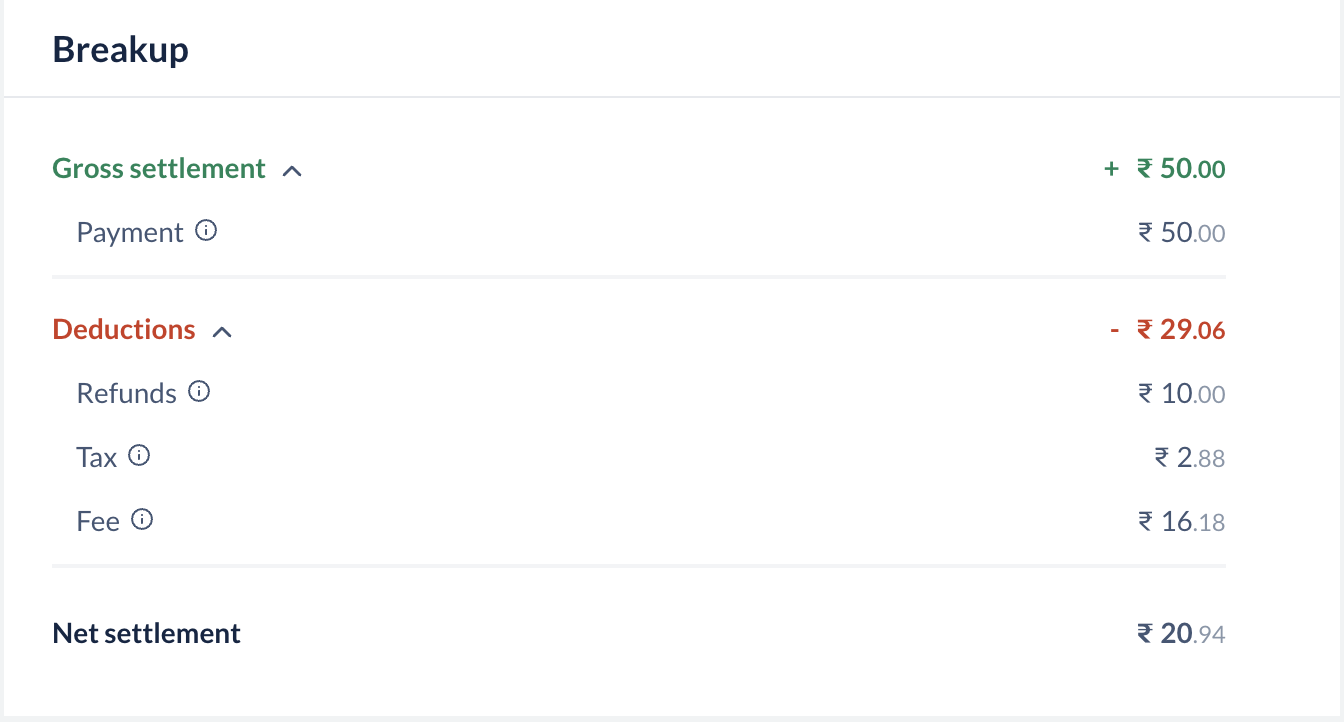
A settlement has the following components:
Payment
The total payment amount that is being settled before deductions.
Adjustment
Adjustments to transactions, if any.
Tax
Tax deducted on the payment.
Fee
Fees deducted by Razorpay for the transactions.
Transfer
Transfers made if any, Transfers are payouts made to your
.Linked accounts are accounts created for third-party sellers by you after onboarding them onto the Razorpay platform.
Refunds
Refunds made if any, are refunds you have issued to your customer.
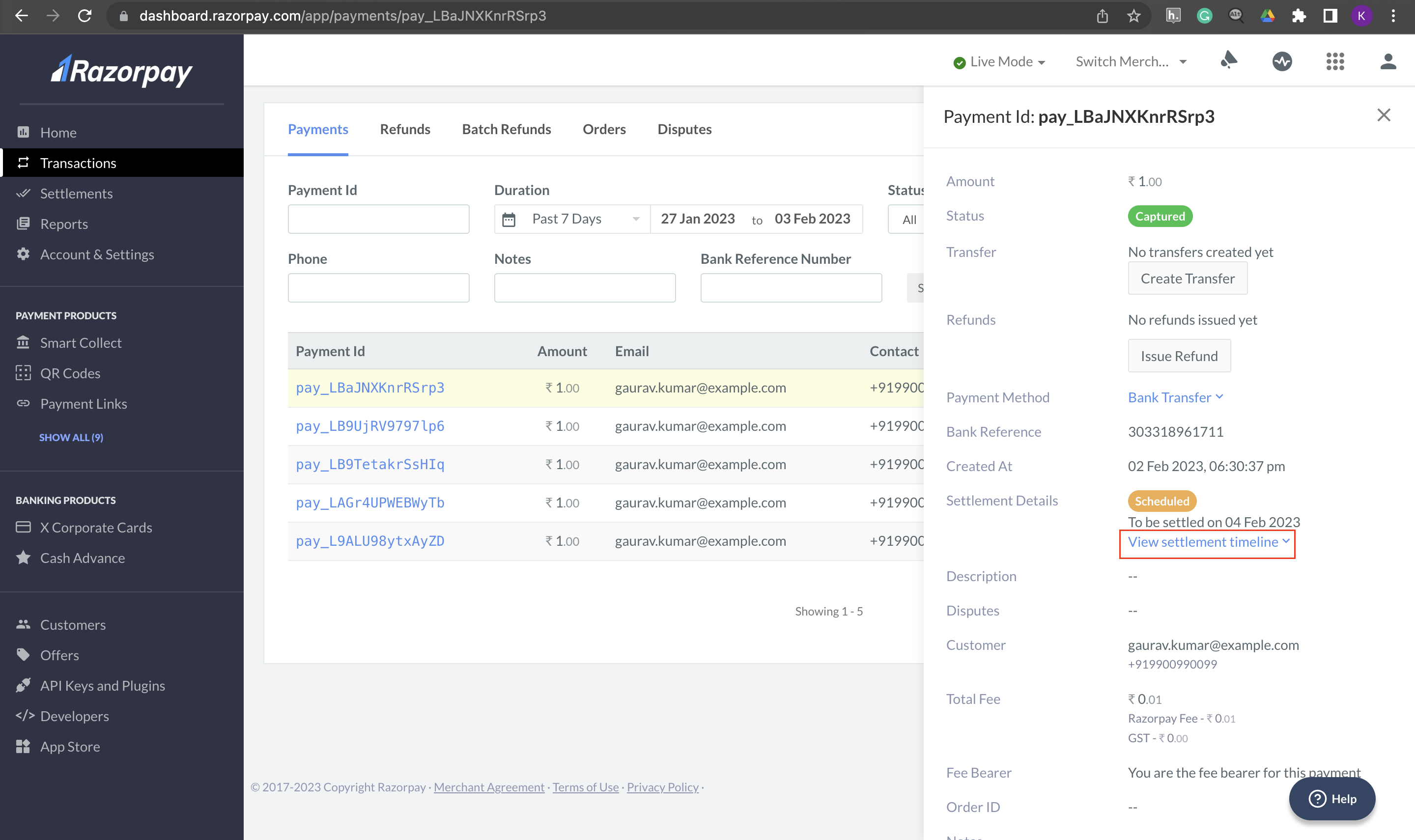
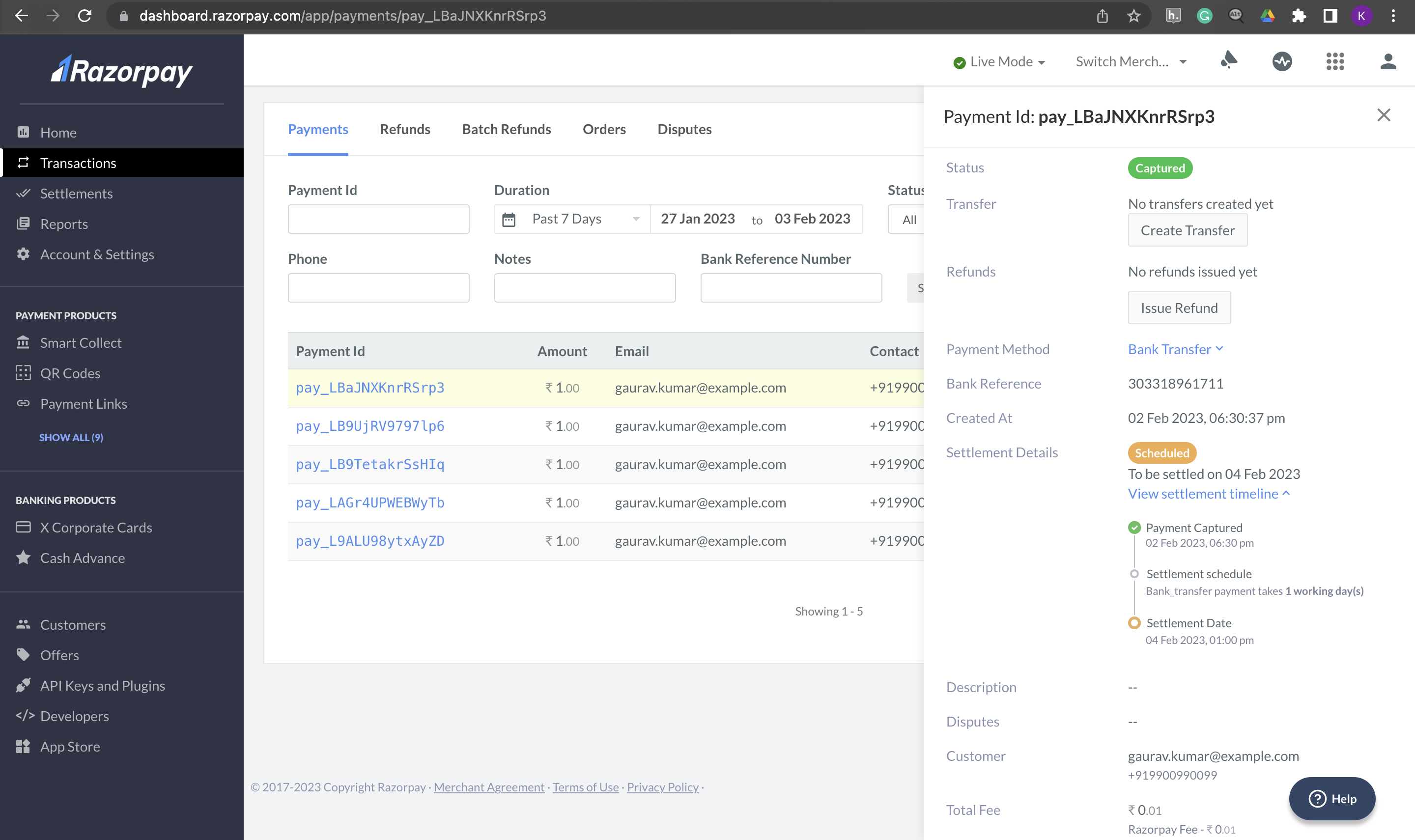
You can view the settlement timeline to check when the settlement for a particular payment will be credited.
To view the settlement timeline:
- Log in to the Dashboard.
- Navigate to Transactions and select Payments or Refunds depending on what you wish to view the settlement timeline for.
- Select the payment id or the refund id you wish to check.
- Click View settlement timeline.
- Upon expanding the settlement timeline, you will be able to see the settlement schedule for that particular payment.
Your settlement can be placed on hold if we detect some risk with your payments or with your Razorpay account. You are notified about this on your Dashboard.
To enable settlements when they are put on hold:
- Log in to the Dashboard.
- Navigate to Home.
- Click Resolve on the notification as shown above..
Detailed insights can be gained using reports and real-time data on the Dashboard. These reports can then be used for accounting and reconciliation purposes. Know more about